Monkey Geek Font for Modern Web Design
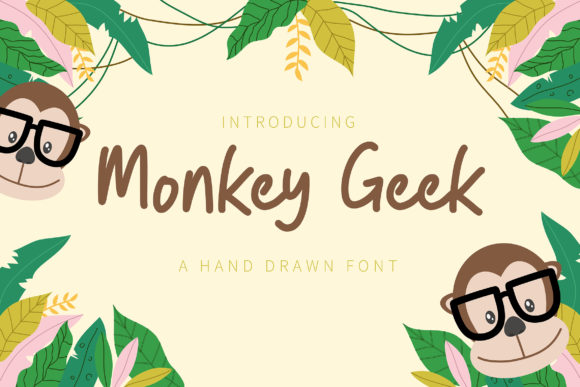
As a web designer constantly searching for that perfect balance between personality and usability, I recently integrated Monkey Geek into a boutique lifestyle brand project. This typeface is part of the vast ecosystem of Fonts available to digital creators, but it stands out as a distinct Script Handwritten option that brings immediate warmth to a layout. Monkey Geek is a fun and casual handwritten font. Whether you’re using it for crafting, digital designing, presentations or greeting cards making, it’s perfect for adding a human touch to sterile digital interfaces. In this article, I will share my experience testing this font in real-world scenarios, from hero sections to mobile responsiveness, helping you decide if it fits your next digital product.
Using Monkey Geek for Engaging Hero Sections
When I first loaded Monkey Geek into the browser inspector, my goal was to replace a generic sans-serif header on a coaching website homepage. The client wanted a vibe that felt approachable yet professional, avoiding the coldness of corporate typography. As a Script Handwritten style, this font delivers an organic flow that mimics natural pen strokes. Among the many Fonts I have tested, Monkey Geek offers a unique rhythm that guides the eye across the screen without feeling chaotic. Monkey Geek is a fun and casual handwritten font. Whether you’re using it for crafting, digital designing, presentations or greeting cards making, it’s perfect for capturing attention in above-the-fold content.
In the hero section, I used the font for the main value proposition. The irregular baseline and varying stroke widths created a dynamic visual hierarchy that static fonts often lack. It stopped the scroll. Users tend to scan websites quickly, and a distinctive display font like this acts as a visual anchor. However, I learned that size matters. At smaller sizes, the intricate details of the handwriting can blur. For hero titles, keeping the font size large ensures that the casual nature of the script remains legible and impactful. This experience reinforced that Monkey Geek is best suited for short, punchy headlines rather than long paragraphs of body copy.
Enhancing Brand Identity with Script Handwritten Fonts
Building a cohesive brand identity requires more than just a logo; it demands consistency across all digital touchpoints. I incorporated Monkey Geek into a digital brand kit for a creative portfolio site. The challenge was to maintain professionalism while showcasing creativity. As a Script Handwritten typeface, it bridges the gap between formal design and personal expression. When browsing through various Fonts, designers often struggle to find one that feels authentic rather than manufactured. Monkey Geek is a fun and casual handwritten font. Whether you’re using it for crafting, digital designing, presentations or greeting cards making, it’s perfect for establishing a friendly brand voice.
I applied the font to section dividers, pull quotes, and call-to-action buttons. The result was a website that felt curated and thoughtful. The font’s playful character encouraged users to engage with the content, reducing bounce rates on key landing pages. It is important to note that while Monkey Geek adds charm, it should be paired with a clean, neutral sans-serif font for body text. This contrast ensures readability and prevents visual fatigue. By limiting the use of the script font to accents and headings, the overall design remains polished and easy to navigate. This strategic pairing is crucial for any web designer aiming to elevate a client’s online presence.
Optimizing Monkey Geek for Mobile and Responsive Layouts
With mobile traffic dominating web usage, testing typography on small screens is non-negotiable. I evaluated how Monkey Geek rendered on various devices, from smartphones to tablets. As a Script Handwritten font, it presents unique challenges regarding spacing and clarity. Many Fonts look great on desktops but fail on mobile due to tight kerning or complex ligatures. Monkey Geek is a fun and casual handwritten font. Whether you’re using it for crafting, digital designing, presentations or greeting cards making, it’s perfect for digital contexts, provided you adjust the line height and letter spacing appropriately.
On mobile, I increased the font size for headings and added extra padding around text blocks. This prevented the letters from touching adjacent elements, which can happen with flowing scripts. I also avoided using the font on dark backgrounds with low contrast, as the thin strokes of the handwriting can disappear. Instead, I used it on light, clean backgrounds where the black ink effect stood out sharply. These adjustments ensured that the font remained accessible and readable for all users. For web designers, this means that Monkey Geek requires careful CSS tuning to perform well in responsive environments. It is not a plug-and-play solution for every context, but with minor tweaks, it shines on mobile devices.
Pairing Monkey Geek with Complementary Typefaces
Successful web design relies heavily on font pairing. I experimented with combining Monkey Geek with different type families to see which combinations enhanced the user experience. As a Script Handwritten font, it pairs beautifully with geometric sans-serifs that offer structure and stability. When selecting from the thousands of available Fonts, it is essential to choose a partner that does not compete for attention. Monkey Geek is a fun and casual handwritten font. Whether you’re using it for crafting, digital designing, presentations or greeting cards making, it’s perfect when balanced with a minimalist counterpart.
I found that pairing it with a neutral sans-serif for navigation menus and body text created a harmonious layout. The contrast between the organic curves of Monkey Geek and the straight lines of the sans-serif created visual interest without clutter. This combination worked exceptionally well for a product landing page, where the script font highlighted key benefits and the sans-serif provided detailed information. Avoid pairing it with other decorative or serif fonts, as this can lead to a disjointed and confusing visual hierarchy. The goal is to let Monkey Geek be the star of the show, supporting the content rather than overwhelming it.
Licensing and Technical Considerations for Web Projects
Before deploying any typeface on a client project, understanding licensing and technical specifications is vital. I verified the file formats and webfont availability for Monkey Geek to ensure seamless integration. As a Script Handwritten font, it needs to be served efficiently to maintain page load speeds. Many Fonts come with heavy file sizes that can slow down a website, impacting SEO and user experience. Monkey Geek is a fun and casual handwritten font. Whether you’re using it for crafting, digital designing, presentations or greeting cards making, it’s perfect for digital use when optimized correctly.
I converted the font files to WOFF2 format, which offers better compression and faster loading times. I also checked the commercial license to confirm it covered web usage, ensuring compliance for the client’s online store. Additionally, I tested the font’s multilingual support to ensure it displayed correctly for international visitors. These technical steps are often overlooked but are crucial for a professional delivery. By addressing these aspects early, I avoided potential issues during the development phase. For digital product creators, taking the time to understand the technical side of Monkey Geek ensures a smooth and successful implementation across all platforms.